
Festoon hire
Festoon hire in Auckland, dry hire or installed
Everything worth knowing before you hire festoons: what comes with the kit, the incandescent or LED call, how spans and power get planned, and which of the two hire paths suits your site. Good festoon lighting is mostly planning. This page shows where that planning goes.
The kit
What comes with the kit
Festoon hire, string light hire, cafe lights: different names, same kit. What separates a lighting company from a hardware shop is everything that comes with the bulbs.
- Spans and cabling. Festoon runs in the lengths your layout needs, with the cabling to link them and get power to the first lamp without improvising.
- Weather-rated fittings. Lamp holders and fittings built for a season outdoors, not a single fine weekend.
- Proper connectors. Outdoor-rated connections between runs. No taped joins, no household double plugs.
- Power leads rated for outdoor use, in the lengths the layout calls for.
- Spares. Spare lamps and fittings in the box, so a dead bulb mid-span on a Saturday evening is a two-minute fix rather than a mission.
The bulb question
Incandescent or LED
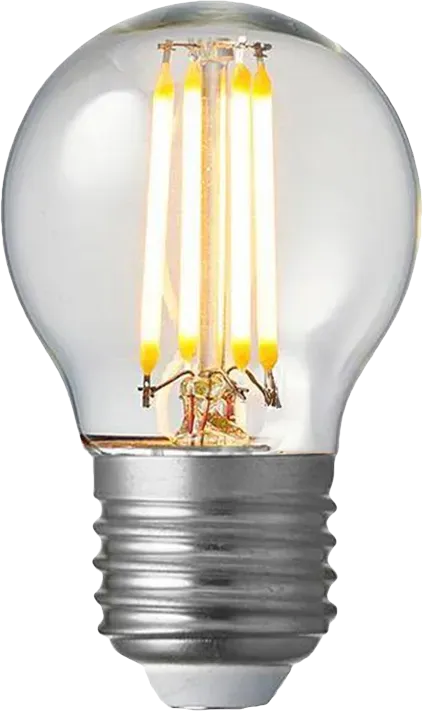
The classic festoon glow comes from an incandescent filament. It is warm, soft, dims beautifully, and it is the look most people have in their head when they say festoons. The cost is power: filament lamps draw many times what an LED does, which limits how far one run can go and puts real load on site supply.
LED festoons draw a fraction of the power, run cool to the touch, put up with knocks, and carry much longer runs off a single feed. Warm-white LED lamps have closed most of the gap on look, and once the light is the only thing you can see, few guests could pick the difference.
The short guide: small site, power close by, look above all, go incandescent. Big site, long runs, tight power, go LED. Plenty of jobs mix both. Tell us the site and we will call it straight.
Layout
Spans, layout and coverage
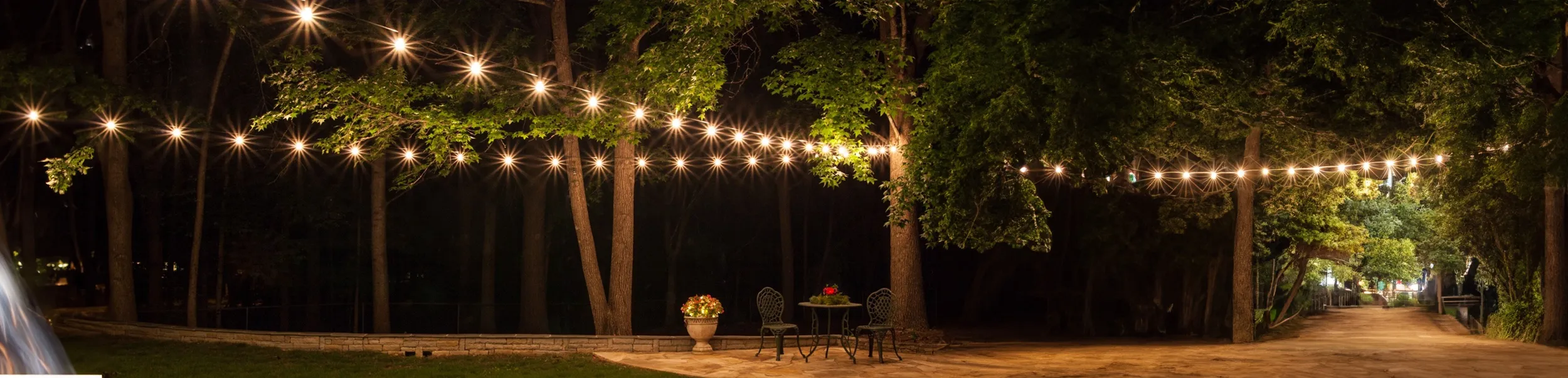
Festoons look effortless when the layout was planned and slightly wrong when it was not. Before the van is loaded we work out where every run goes, what it fixes to, and what cable and power it needs, so the curves hang even across the whole site instead of drooping in one corner and straining in another.
Each run needs something solid at both ends: a building, a post, a mature tree. Where the site offers nothing to fix to, we rig poles on weighted or staked bases and set the heights exactly where the design wants them.
[Dillon to supply: span lengths carried in stock, and the maximum run off a single feed for incandescent and LED]
Weather
Built for outdoor use
The fittings we hire are IP rated for outdoor use, which in plain terms means rain is part of the job description. Lamp holders are sealed, connections between runs are weatherproof, and cable is run so water sheds off rather than pooling in a joint.
Wind gets the same respect. Spans are tensioned and anchored to ride out a gusty night, and installed jobs are rigged to stay put after we drive away, through the event and whatever the forecast does overnight. Multi-day events are the test that matters, and the kit is specified for exactly that.
Hire it yourself
Dry hire
Dry hire is the right call when the site suits it and you are happy doing the hanging: shorter spans, solid anchor points, power close at hand, and someone comfortable on a ladder. Backyard weddings, birthdays and small venue jobs sit squarely in this lane.
You collect the spans, outdoor-rated leads, connectors and spares, coiled and labelled, with a plain run-through of how it goes together and the mistakes to avoid.
The hanging, the power connection on site, and the weather calls during the hire are yours. If a serious blow is forecast, take the kit down: easier than fishing it out of a hedge. It comes back to us in the state it left.
Before anything leaves, we test every lamp, inspect and test the leads, and check connectors and seals. If something still misbehaves on site, ring us and we will talk you through it or swap it.
We do the lot
Designed and installed
For larger sites, long or high spans, tricky anchor points, or a date where nothing is allowed to go wrong, we design and install the lot. Here is what that path looks like.
- Site visit or plans. Most Auckland sites get a visit. Further afield, good photos, measurements and a site plan get us most of the way before we travel.
- Layout design. Span positions, anchor points, heights, lamp spacing and colour temperature, settled before anything is booked onto a truck.
- Power. We plan the electrical load, bring proper distribution, and confirm what the site can supply, so switch-on is a formality rather than a test.
- Install. Our crew rigs the runs, sets the tension, tests everything and hands it over working, on schedule.
- Pack-out. When it is over we take it all down and leave the site the way we found it.
If festoons are one layer of a bigger night, with stages, trees or structures in the picture too, that side is covered on the event lightingpage.
Tell us about the night you are planning
A date, a site and a rough scale is all we need to get started. Summer weekends book out early.